Almost every client I meet asks me the same question before their shoot, usually in a slightly worried voice: "Boyd — what on earth do I wear?"
I love that question. Not because there's one right answer, but because it tells me they care. They understand that these images are going to represent them — on their website, on LinkedIn, in the press, in front of the exact people they want to work with. What you wear isn't a small detail. It's part of the story we're telling together.
So let me take the pressure off. After more than ten years photographing people across London and Hampshire, here's everything I actually tell my clients about what to wear — and why it matters more than you think.
Start with the person you're becoming, not the person you were
Before we talk about colours or collars, I want you to ask yourself one question: who am I speaking to in these images?
A personal branding shoot isn't about looking like everyone else in your industry. It's about looking unmistakably like the best, truest version of you — the person your dream client is hoping to find. So if you're a coach who helps people feel calm and grounded, dressing in something sharp and severe sends the wrong message. If you're a founder raising your profile, a crumpled t-shirt won't carry the authority you've earned.
Dress for the room you're walking into next, not the one you've just left.
The colours that photograph beautifully
Colour is where most people overthink things. Here's the simple version.
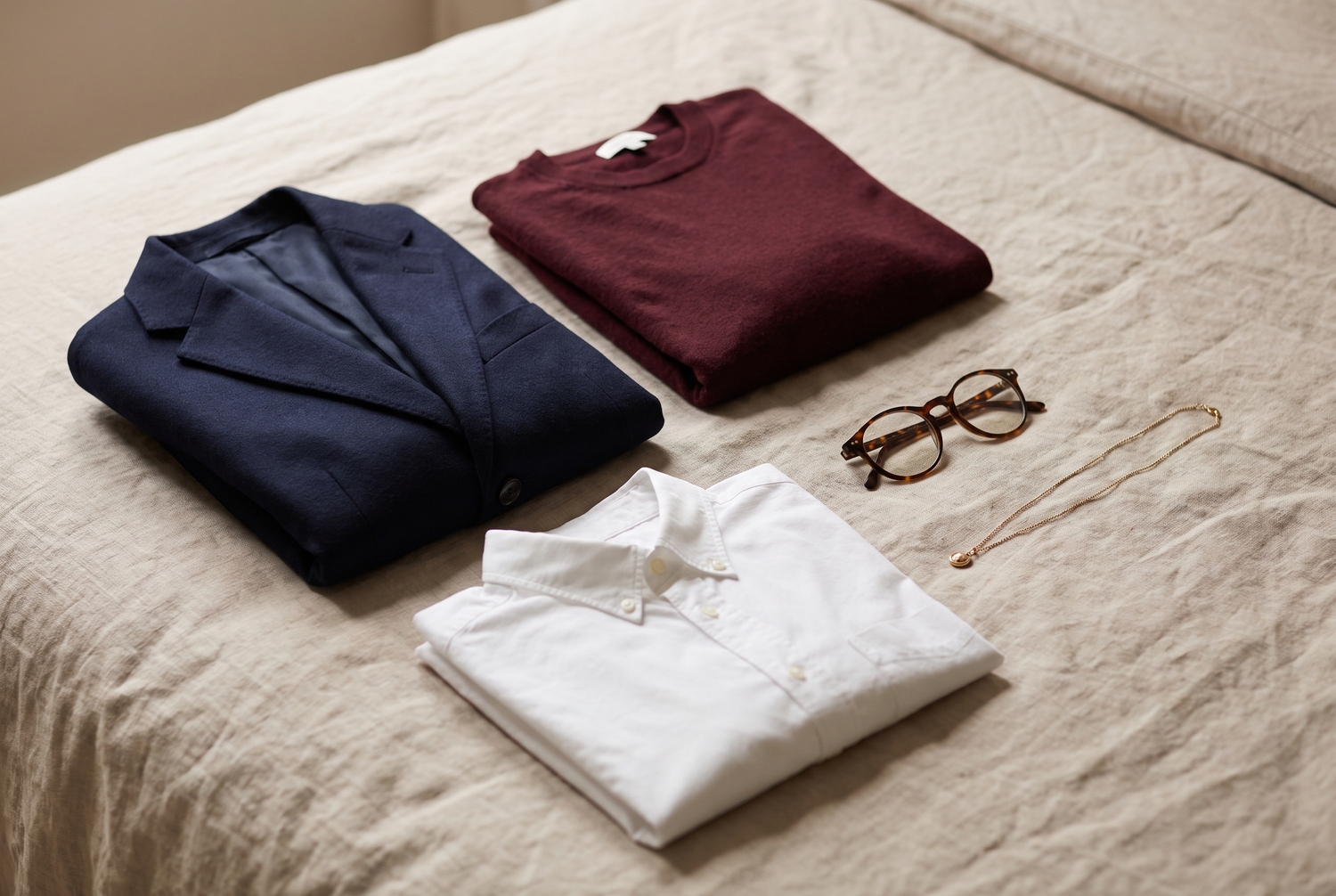
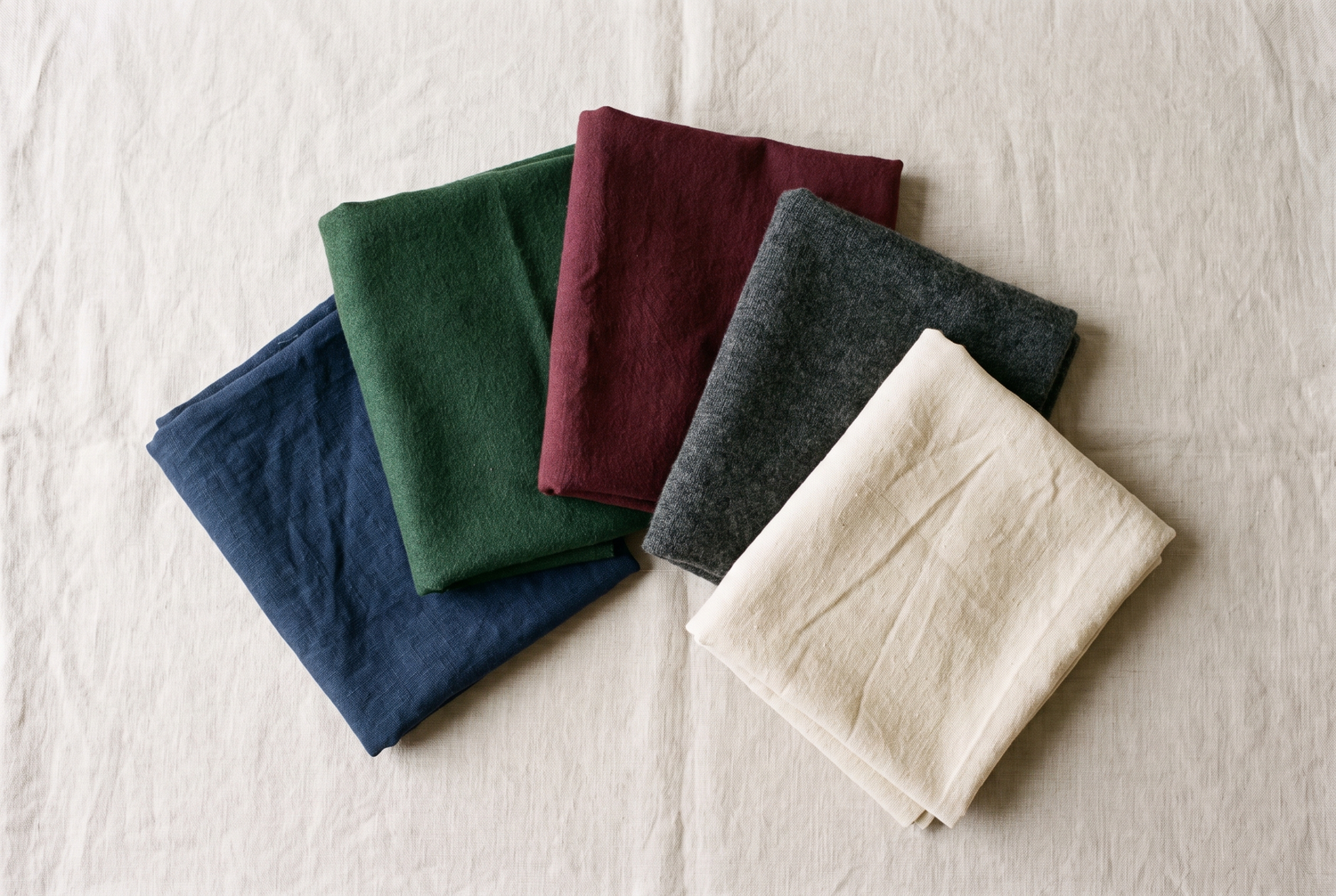
Solid, considered colours almost always work better than busy patterns. Deep, rich tones — navy, forest green, burgundy, charcoal, warm neutrals — photograph with a quiet confidence and let your face stay the focus. They also age well; a portrait shouldn't look dated in eighteen months because you chose whatever was trending.
If you love colour (and I hope you do), bring it in deliberately — a single bold piece against a simpler background reads as intentional and full of personality. That's very different from three loud colours competing for attention.
A few things to be gentle with: tight stripes and small checks can shimmer strangely on camera, and slogans or big logos date fast and pull the eye away from you. Neither is forbidden — just wear them knowingly.
Bring options, not outfits
Here's the mistake I see most often: people arrive with one outfit they've agonised over, and nothing to change into.
Bring three to five pieces you genuinely feel wonderful in. Mix a more formal look with something relaxed. That range gives us room to create images for different parts of your brand — the polished headshot for the press, the warmer, softer frame for your About page, the confident wide shot for a talk or a pitch. Variety in the wardrobe becomes variety in how you can use the photos.
And please — wear things that fit now, not the size you're hoping to be by summer. Clothes that fit well make you stand differently. The camera sees it.
Fit and texture do the quiet work
If you take one practical thing from this post, make it this: fit matters more than brand or budget. A well-cut, unremarkable jacket will always beat an expensive one that pulls at the shoulders.
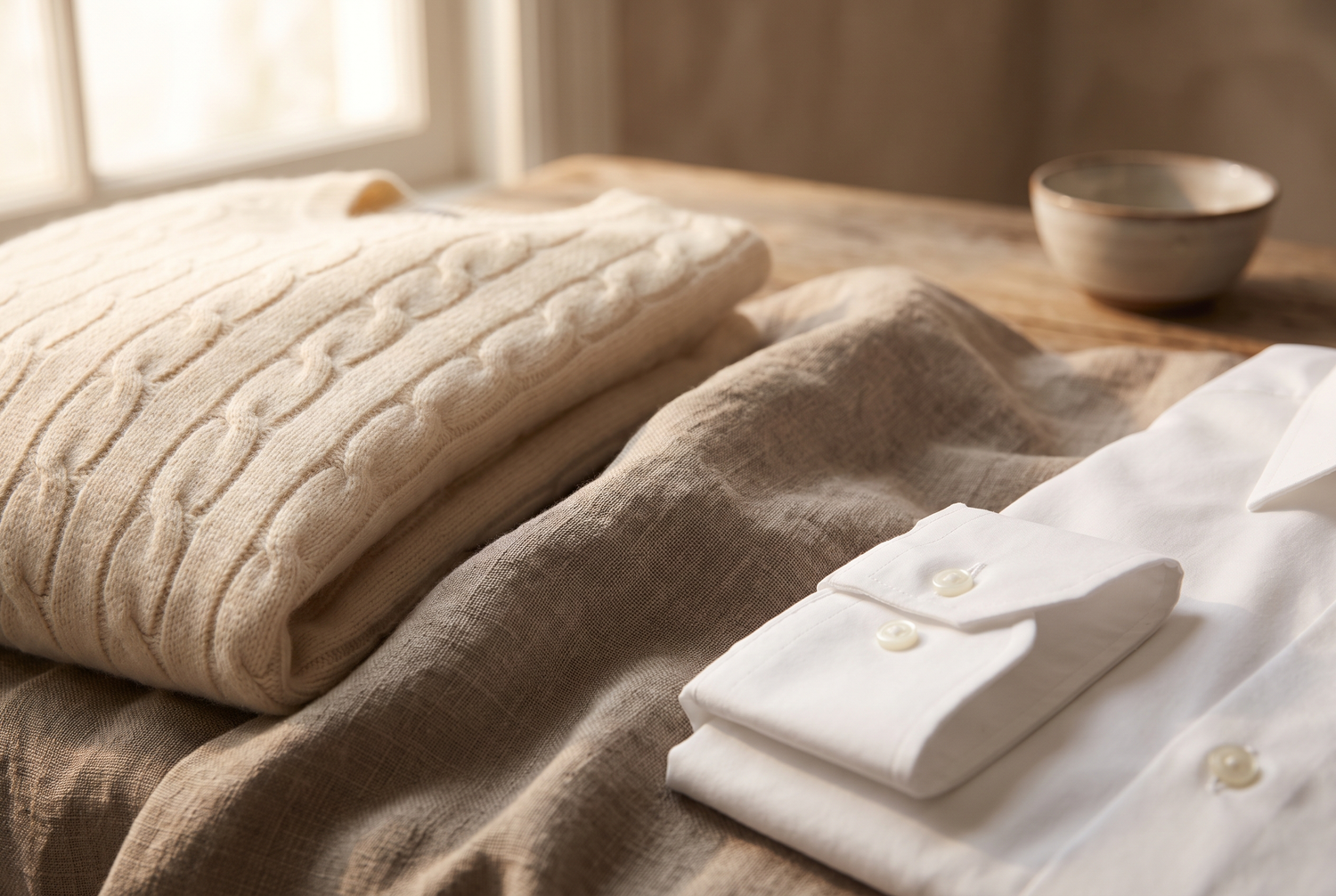
Texture is your secret weapon. Linen, fine knitwear, wool, a good cotton shirt — these catch light in a way that makes an image feel rich and tactile. Flat, synthetic fabrics tend to look flat in a photograph too. When you're choosing pieces, run your hand over them and ask whether they feel like you.
What to do about grooming, glasses and the small stuff
Keep hair and grooming close to how you look on a normal good day — you want the images to still look like you when a client meets you in person. If you wear glasses every day, wear them in the shoot; they're part of your face and your brand. We can angle to control any glare.
Jewellery and accessories should feel like punctuation, not paragraphs. One piece you love says more than everything you own worn at once.
The thing no outfit can fix (and how I handle it)
I'll be honest with you: I've never met anyone who felt completely relaxed in the first ten minutes in front of a camera. Not one person. The clothes are the easy part — the real work is helping you feel like yourself once the lens is pointed at you.
That's the part I quietly obsess over. My whole approach is built around drawing out your character rather than posing you into someone stiff and unfamiliar. I want you to leave not just with beautiful images, but with a slightly bigger sense of your own worth. That's what I mean when I talk about dimensional portraits — pictures with a real person inside them.
So don't lose sleep over the wardrobe. Bring a few things you love, trust the process, and let me handle the rest.
Ready when you are
If you're planning your personal branding images and want a portrait experience that actually feels like you, take a look at how I work on my personal branding page, or see what the full portrait experience involves. I only take on a limited number of commissions each month, so we're never rushing — your session gets the time and care it deserves.
Whatever you choose to wear, come as you are. I'll take care of the rest.